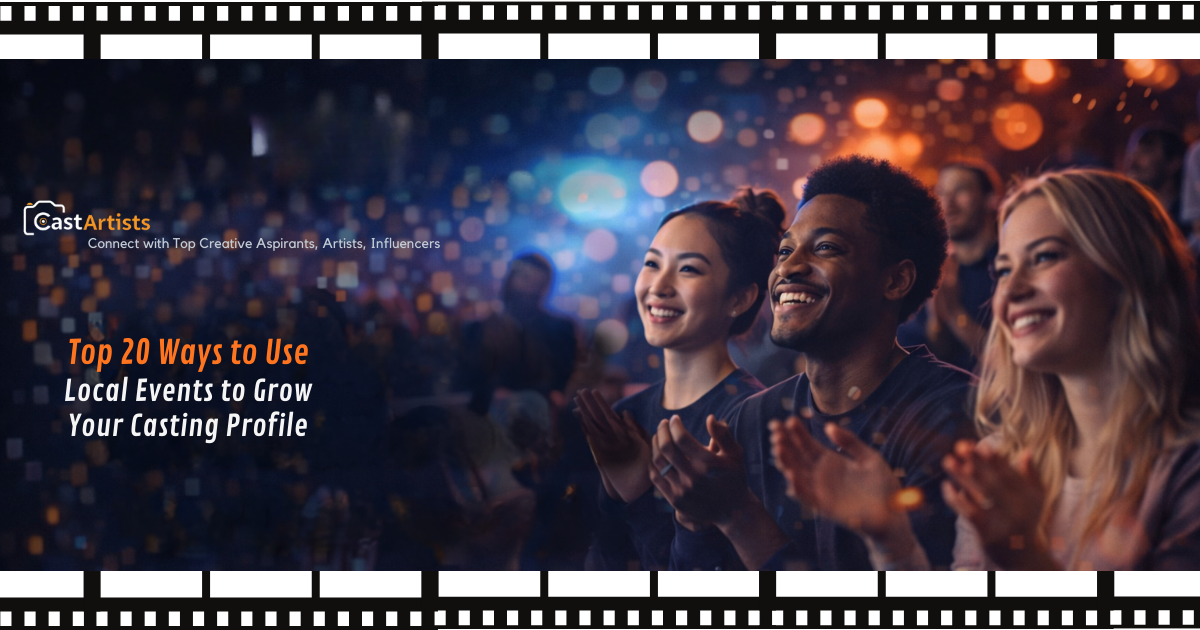
Getting visible in the casting world often starts long before you land a role , it starts in the room. Local events are a high-value, low-cost way to build your network, sharpen on-camera skills, gather content, and get noticed by casting directors and production teams. This guide gives 20 practical, action-oriented ways to leverage community events so your casting profile becomes impossible to overlook.
Below you’ll find simple tactics you can use this week, plus medium-term steps to turn each event into a sustained visibility engine. Use these at open mics, film festivals, trade shows, pop-ups, charity galas, local screenings, and community theatre nights.
- Attend industry meetups and introduce yourself to filmmakers.
- Volunteer at film festivals to meet casting professionals.
- Host or co-host a small workshop or masterclass.
- Perform at open mics and short-format showcases.
- Join local theatre productions to build credits and footage.
- Network at trade shows and creative expos.
- Offer to be an extra on student and indie shoots.
- Create event-based content for your social channels.
- Collect business cards and follow up within 48 hours.
- Exchange headshots with local photographers at meetups.
- Partner with local brands for live demos or activations.
- Pitch a talk or panel slot at a local event.
- Host a casting call meetup or mock casting session.
- Support community causes and be present at galas.
- Attend industry workshops and take visible notes.
- Build a location-specific press kit for producers.
- Offer skill swaps (voiceover, movement coaching) at events.
- Run a pop-up portfolio review day.
- Use events to collect testimonials and short video clips.
- Turn event connections into recurring collaborators.
1. Attend industry meetups and introduce yourself
Why it matters: Meetups gather people who already care about film, media, and casting. They’re low-pressure venues to make an impression.
Quick wins
- Find 1–2 monthly meetups (Film Friday, Local Creatives).
- Practice a 20-second intro that includes your type, recent work, and the roles you want.
Scale steps
- Exchange LinkedIn & follow up with a tailored message the next day.
- Offer a concrete next-step: “Can we set a 15-minute call to discuss upcoming indie projects?
2. Volunteer at film festivals
Why it matters: Festivals bring casting directors, producers, and agents into one place; volunteers gain backstage access.
Quick wins
- Apply to volunteer at nearest festival; aim for press or guest liaison roles.
- Be visible, professional, and helpful , you’ll meet decision-makers.
Scale steps
- Keep a “festival follow-up” list of contacts and a short email template you can customize.
3. Host or co-host a workshop or masterclass
Why it matters: Teaching demonstrates expertise, builds authority, and attracts peers and industry guests.
Quick wins
- Run a 60-minute scene-study or casting prep session at a community centre.
- Charge a small fee or offer it free to attract a good crowd.
Scale steps
- Record the session, edit short clips for your profile, and collect attendee emails for a newsletter.
4. Perform at open mics and short showcases
Why it matters: Live performance sharpens timing and presence. Casting pros often scout local showcases.
Quick wins
- Prepare a tight 2–3 minute piece that highlights your strengths.
- Arrive early and introduce yourself to the host.
Scale steps
- Ask for recorded footage and permission to use the clip in your online reel.
5. Join local theatre productions
Why it matters: Theatre builds discipline, credits, and quality footage for casting profiles.
Quick wins
- Audition for a small role in a community production.
- Take on technical tasks (stagehand) to deepen relationships.
Scale steps
- Negotiate a taped scene or a photo session during tech rehearsals for your showreel.
6. Network at trade shows and creative expos
Why it matters: Trade shows attract film suppliers, agencies, and sponsors who work with productions.
Quick wins
- Attend as a visitor with business cards and a concise pitch.
- Target booths that align with media production.
Scale steps
- Connect with exhibitors on LinkedIn and offer to support upcoming shoots (extras, talent, test shoots).
7. Offer to be an extra on student and indie shoots
Why it matters: Student films and indie shoots are hands-on ways to gain credits and on-set familiarity.
Quick wins
- Join local filmmaking Facebook groups and reply to casting calls.
- Treat every job like a professional gig , be punctual, prepared, and polite.
Scale steps
- Request a credited role and short clips for your showreel.
8. Create event-based content for your social channels
Why it matters: Events offer authentic content , behind-the-scenes, networking, live Q&A , that signals activity to casting searches.
Quick wins
- Post short clips and photos with clear captions and tags (event, names, hashtags).
- Use reels or short-form videos to boost algorithmic discovery.
Scale steps
- Repurpose content for your site and highlight reel; tag relevant attendees to widen reach.
9. Collect business cards and follow up within 48 hours
Why it matters: Prompt follow-up converts casual conversations into relationships.
Quick wins
- Keep a digital note for each card with one observation from your chat.
- Send a short, personalized follow-up message referencing that detail.
Scale steps
- Add contacts to a segmented list (casting directors, producers, photographers) and craft tailored outreach.
10. Exchange headshots with local photographers
Why it matters: High-quality images matter. Photographers at events often seek talent to expand portfolios.
Quick wins
- Arrange a quick headshot swap or mini-session at a networking meetup.
- Offer models, styling, or location assistance in return.
Scale steps
- Negotiate social credit and permission to use images across your profiles.
11. Partner with local brands for activations
Why it matters: Brands run events that need performers and on-stage talent. This is paid, visible experience.
Quick wins
- Reach out to local PR agencies and event managers with a one-page availability sheet.
- Volunteer for short demos or emcee roles.
Scale steps
- Build a brand pitch showing how your presence increases engagement and brand storytelling.
12. Pitch a talk or panel slot at a local event
Why it matters: Speaking roles raise credibility and put your name in front of industry professionals.
Quick wins
- Propose a 20-minute session on a concrete topic (e.g., “Self-Tape Essentials for 2024”).
- Offer the organizer ready-to-use session copy to make acceptance easy.
Scale steps
- Collect attendees’ contacts and turn the session into video content for your portfolio.
13. Host a casting call meetup or mock casting session
Why it matters: Hosting positions you as a connector and provides producers with a talent pool.
Quick wins
- Organize a casual meetup where attendees read short audition pieces.
- Invite a local director or casting assistant to give feedback.
Scale steps
- Produce a highlights reel and a grouped contact list to share with attendees and industry guests.
14. Support community causes and attend galas
Why it matters: Charity galas and fundraisers bring high-profile attendees into one room.
Quick wins
- Volunteer as event staff or stage assistant to increase your visibility.
- Prepare a short line about your work for brief introductions.
Scale steps
- Follow up with organizers and VIPs; offer to audition for upcoming charity videos or campaigns.
15. Attend industry workshops and take visible notes
Why it matters: Demonstrating learning and sharing insights makes you memorable to peers and speakers.
Quick wins
- Tweet or post short takeaways during the workshop and tag speakers.
- Offer to write a 300-word follow-up post summarizing the session.
Scale steps
- Use the post as content in your talent newsletter and link to your casting profile.
16. Build a location-specific press kit
Why it matters: Producers scouting your city appreciate a single link that packages your headshots, credits, and reels.
Quick wins
- Prepare a PDF one-sheet and a short landing page for local producers.
- Include availability windows and sample rates or collaboration terms.
Scale steps
- Share the kit in targeted follow-ups after events and list it in local production directories.
17. Offer skill swaps at events
Why it matters: Exchanging services (e.g., voiceover coaching for photos) builds goodwill and expands your network.
Quick wins
- Post an offer in a local creatives group: “I’ll do a 30-minute voiceover workshop in exchange for 10 headshot proofs.”
- Meet at an upcoming event for the swap.
Scale steps
- Package skill-swap sessions as mini-collaboration projects and document results.
18. Run a pop-up portfolio review day
Why it matters: A pop-up invites attention and creates content as peers and pros drop by.
Quick wins
- Book a small co-working space for half a day and invite local photographers and peers.
- Offer quick 10-minute reviews and mini-shoots.
Scale steps
- Turn the event into a quarterly fixture and create a waitlist.
19. Use events to collect testimonials and short video clips
Why it matters: On-the-spot testimonials and B-roll bring credibility and genuine energy to your profile.
Quick wins
- Ask collaborators for a 10–20 second testimonial on their phone.
- Shoot short BTS clips and ask permission to use them.
Scale steps
- Edit a testimonial montage for your website and social channels.
20. Turn event connections into recurring collaborators
Why it matters: A single production becomes a pipeline when you cultivate repeat relationships.
Quick wins
- Add promising contacts to a “collab” folder and reach out quarterly with relevant updates.
- Offer a small, concrete way to help (promo, social share, reference).
Scale steps
- Formalize a “friends of the craft” list for quick casting calls and referrals.
Putting it all together: an event-to-profile workflow
- Plan: Choose 2–3 weekly events that match your goals.
- Show up prepared: Headshots, one-sheet, 20-second intro, business cards.
- Engage: Participate (volunteer, speak, perform).
- Capture: Take photos, short video clips, and testimonials.
- Follow up: Message contacts within 48 hours and share your one-sheet.
- Publish: Post event footage to social, update your Cast Artists profile, and add new credits.
Final tips and best practices
- Be consistent: Visibility compounds. Attend regularly and show progress.
- Be professional: Respect schedules, sign-in rules, and production etiquette.
- Be helpful: Offer value first , help producers, photographers, and other artists.
- Track results: Note which events led to auditions, contacts, or roles. Prioritize the high-return ones.
If you’re ready to accelerate your casting career with targeted event strategies, Cast Artists helps you showcase your portfolio and connect with opportunities. For help, services and tailored support, reach out:
📧 info@castartists.com
📞 +91 9490056002
Explore our services: http://castartists.com/services