Art history is full of surprises – dramatic turns, wild personalities, technical breakthroughs, and cultural shocks that changed how humans see and make the world. Below are 20 fascinating art history facts that read like stories: some are about technique, some about scandal, and some about how art quietly reshaped society. Each fact is written to be shareable, memorable, and useful for creators, brands, and production teams on Cast Artists.
Why these art history facts matter
Knowing art history helps artists and creatives understand visual language, cultural context, and storytelling techniques that still shape modern media – from film cinematography to museum-worthy campaigns. These facts are not trivia; they’re tools for richer creative decisions.
Top 20 Art History Facts
1. Some cave paintings are older than you think
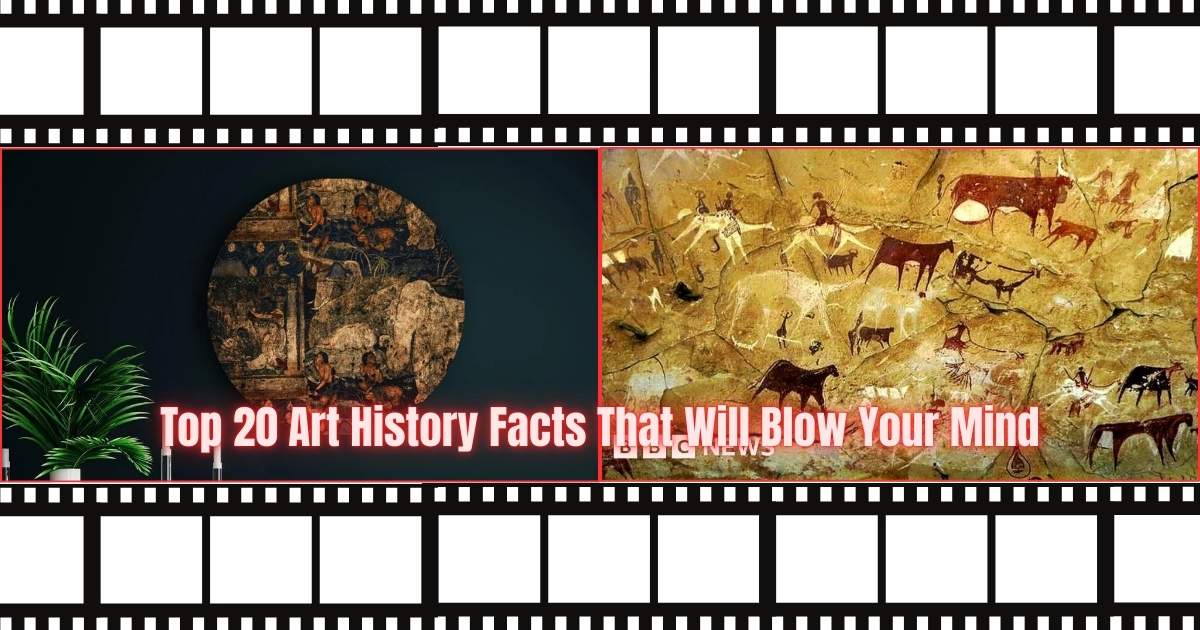
Recent discoveries show cave paintings in places like Sulawesi (Indonesia) and parts of Europe that are over 40,000 years old. These early images – hand stencils, animal figures and abstract marks – prove humans were making symbolic visual statements tens of thousands of years before written history.
2. The “canvas” used to be a cave wall
Before paper or linen, people painted on rock faces, portable objects, and architectural surfaces. That continuity – from Paleolithic caves to public murals today – reminds us that site and scale have always mattered in art.
3. Linear perspective was a game-changer in the Renaissance
In the early 1400s, artists and architects like Filippo Brunelleschi and Leon Battista Alberti codified linear perspective, giving painters a method to create convincing three-dimensional space on flat surfaces. That mathematical breakthrough is the ancestor of cinematic depth and modern visual effects.
4. The Parthenon was built with optical corrections
Ancient Greek builders introduced subtle design tweaks – columns with a slight outward bulge (entasis) and a gentle curve in the stylobate – to counter optical illusions. The Parthenon’s subtle distortions were intentional to make the temple look “perfect” to the human eye.
5. Michelangelo painted an entire ceiling on scaffolding
Michelangelo spent years painting the Sistine Chapel ceiling working on custom scaffolding hundreds of years before modern lifts. He designed much of the scaffolding himself and painted while contending with the practical challenge of scale – a massive, endurance-driven creative feat.
6. The Mona Lisa was stolen – and became even more famous for it
In 1911 the Mona Lisa was taken from the Louvre by Vincenzo Peruggia and was missing for two years. The theft turned a famous painting into an international sensation, illustrating how narrative and scandal can amplify an artwork’s cultural fame.
7. The Louvre used to be a fortress and palace
Before it became the world’s most-visited museum, the Louvre in Paris served as a medieval fortress and later a royal palace. Its transformation into a public museum during the French Revolution marked a significant shift toward democratizing art.
8. A critic coined “Impressionism” from a Monet painting
The term Impressionism started as an insult. A critic derided Claude Monet’s Impression, Sunrise (1872), calling the loose, light-filled style an “impression” rather than a finished painting. The artists embraced the name – and changed modern painting.
9. Lapis lazuli made blue more valuable than gold
Ultramarine blue, ground from lapis lazuli mined in Afghanistan, was once more expensive than gold. Renaissance painters often reserved ultramarine for sacred figures like the Virgin Mary; the pigment’s cost influenced composition, meaning, and patronage.
10. The “Lion-man” is one of the earliest figurative sculptures
A carved mammoth-ivory figure known as the Lion-man (from Hohlenstein-Stadel) is about 40,000 years old and stands among the earliest known figurative sculptures, showing humans were imagining hybrid and symbolic beings in the deep past.
11. Dürer reinvented the artist’s social image with self-portraits
Albrecht Dürer’s self-portraits, painted with deliberate gravitas, helped shift how artists were seen – not anonymous craftsmen but intellectual creators. This re-framing set a precedent for the modern artist’s public identity.
12. Photography rewired painting and seeing
The invention of photography in the 19th century forced painters to rethink representation. Movements like Impressionism and later modernism responded to the camera by focusing on perception, light, abstraction, and the painterly gesture – not merely realistic depiction.
13. Ukiyo-e prints influenced European modernism
Japanese woodblock prints (ukiyo-e) flooded Europe in the 19th century and profoundly influenced artists like Monet, Degas, and Van Gogh. Their flattened perspective, bold cropping, and emphasis on everyday scenes helped birth modern composition techniques.
14. Picasso’s “Guernica” turned a painting into political witness
Picasso painted Guernica (1937) reacting to the bombing of a Spanish town. The monumental black-and-white canvas transformed political atrocity into a universal visual protest – an example of art operating as public testimony and historical record.
15. Artemisia Gentileschi broke barriers for women artists
Artemisia Gentileschi (17th century) became a celebrated Baroque painter whose dramatic works and personal history challenged the male-dominated art world. Her renewed appreciation today highlights art history’s shifting narratives about gender and power.
16. The largest art auction records have shocked markets
Modern auction headlines reveal that artworks can change hands for hundreds of millions (for example, a few works sold for hundreds of millions of dollars in recent years). These sales demonstrate art’s role as both cultural object and high-stakes financial asset.
17. Some artists deliberately erased their signatures
Art can be intentionally anonymous or self-effacing. From medieval workshop pieces to modern street artists who remove identifying marks, erasing the artist’s name has been used as a political and aesthetic strategy.
18. The camera obscura was an artist’s tool long before cameras
Optical devices like the camera obscura were used by artists for centuries to study light and perspective – a practical precursor to photographic lenses and a reminder that seeing is often engineered as much as observed.
19. Art movements often cross-pollinate across media
Movements such as Dada, Surrealism, and Futurism were never pure “painting only” movements – they crossed into poetry, performance, film, and design. Today’s cross-media projects trace their roots to these interdisciplinary beginnings.
20. The Guerrilla Girls changed museum accountability
Formed in 1985, the Guerrilla Girls used anonymous, graphic posters and public interventions to expose sexism and racism in the art world. Their activism forced institutions to measure and justify whose work they exhibited – a legacy still felt in museum policies and commissioning practices.
What creative professionals should take from these facts
These facts highlight how art is a cultural amplifier: technique, scandal, materials, and politics all shape visual meaning. For directors, producers, and brands, understanding the historical context behind an image or style can make campaigns more resonant and authentic.
How Cast Artists helps visual creators and brands
Cast Artists connects artists, illustrators, photographers, and digital creators with production houses, brands, and casting opportunities. If you’re inspired by history and want to translate that into real projects – murals, set design, visual branding, or digital assets – Cast Artists helps you build a professional portfolio and get discovered.
Contact Cast Artists
For regarding all the services mentioned here:
🌐 Our Services: http://castartists.com/services
📞 Phone: +91 9490056002
💬 WhatsApp: https://wa.me/+919490056002
Start showcasing your talent and connect with the right creative opportunities today through Cast Artists.